
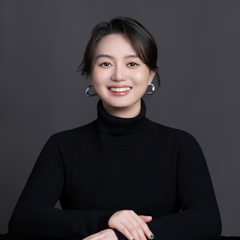
Huijuan PENG (Sarah)
PhD Candidate
Singapore Management University, Centre for Digital Law
Education
Huijuan Peng is a PhD candidate in Law, Commerce and Technology at the Yong Pung How School of Law, Singapore Management University (SMU). She began her doctoral studies after more than a decade of teaching law at international universities.
Huijuan is trained in both civil and common law traditions and is fluent in English and Chinese. She holds an LL.B. with a dual degree in Economics from Minzu University of China (China); an LL.M. from Temple University (United States; Temple–Tsinghua LL.M. Program); and a Master of Research in Management from the University of Liverpool (United Kingdom).
Professional Appointments
Before beginning her PhD at SMU, Huijuan taught law at Xi’an Jiaotong-Liverpool University, an international joint-venture university in China, where she also served as Programme Director. Her broader teaching experience spans undergraduate, postgraduate, executive education, and MBA-level law courses at universities and business schools, including the University of Otago, SKEMA Business School, and emlyon business school.
At SMU, she co-designed and co-taught “AI, Law, and Ethics,” a graduate-level course for LL.M. and J.D. students. She is also independently developing an advanced course, “AI, Law and Governance.”
In 2017, she delivered a TEDx talk and remains interested in public speaking and in making complex legal and technological ideas accessible beyond academia.
Research Areas
Huijuan’s research lies at the intersection of law and artificial intelligence, with a focus on legal attribution in the age of AI. Her primary research interests include generative AI and copyright; deepfakes, synthetic media, and identity; agentic AI and legal responsibility; AI governance; comparative AI regulation; and legal subjectivity.
Her research is comparative, with a particular focus on the United States, China, and Singapore. At a broader level, her work asks how law should respond when AI systems create, imitate, decide, and act, and how AI unsettles the human foundations of law.
Her academic publications have appeared in the Journal of Tort Law and the Singapore Academy of Law Journal. She has also published articles for professional and public audiences in ThinkChina and LawTech.Asia.